Showing posts with label writing tips. Show all posts

Monday, June 13, 2022

Writing Contests - Worth the Effort

Have you ever entered a writing contest? How did you do? If not, why not?

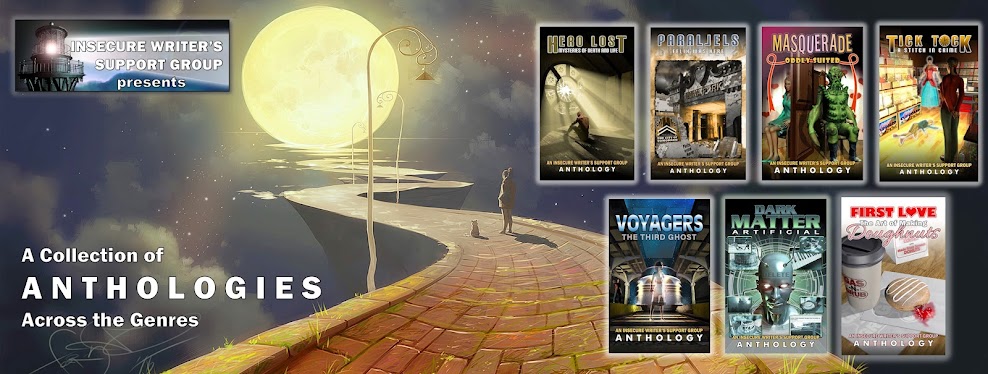
Writing contests can be a great source of inspiration, feedback, and creative exercise. Here, the authors of the First Love IWSG Anthology expound on the pros and cons (mostly pros) of entering a writing contest.


From Kim Elliot...
I’ve entered a few brand-sponsored contests on Wattpad.com. I was thrilled to win Hilroy’s #startwriting contest and Tim Hortons’ #timscoldbrewstories contest. Each of those earned me a nice cash prize which I’m using to finance my novels. Contests are a great way to spark creativity and compare your style to other writers. I plan to enter many more!


From Linda Budzinski...
For me, contests provide a great source of inspiration. I love having a prompt, a specified word count, and a deadline. A blank page can be daunting, but the parameters inherent in contests make the creative process more manageable. "The End" is in sight before you've even set pen to paper! And while the result--potentially winning and/or having my story published for others to read--is exciting, I try to allow the joy of writing and creating to be an end in itself.


From Denise Covey...
I don't enter writing contests as a rule. The IWSG Anthology was different as I'd wanted to see a romance genre contest ever since it started. So when the romance contest was announced, I felt duty bound to write a story seeing I'm a romance author. It was great to win a place and I'm really excited to see the Anthology published. 

From S.E. White...
I enter writing contests because apparently I really enjoy pain. Sorry, bit of sarcasm sneaking in. Really, I enter writing contests for the honest editorial feedback from unbiased readers (i.e. not my friends and obligated to sugarcoat anything). I firmly believe that editors and beta readers are my best friends, catching my plot holes, boring moments, and downright embarrassing mistakes. Sometimes I don't have a trusty, brutally honest beta reader to turn to. Editors can get quite pricy, and occasionally they aren't in my budget. But a writing contest is usually pretty cost-effective (ranging from free to 20 or 30 dollars to enter) and gives me at least three different judges feedback. Well worth the occasional sting, in my recommendation.


From Michael DiGesu...
I enter writing contests mainly to sharpen my skills and to hopefully have a strong enough entry to be published. This was the first time one of my stories has been chosen, and I am thrilled. Contests force you to write, polish, and submit. They are a wonderful way to have your stories read by professionals, and that can lead to bigger and better things. I generally submit to at least five contests a year. Several have been through Writer’s Digest and others through mainstream magazines like the New Yorker or GQ. My advice on them is to be select. Submitting to smaller publications or through writing blogs may be best to way to start. Contests like the ones through Writer’s Digest can get costly and they are extremely competitive. 
None of my stories have ever made it into even the top 50. They must get thousands of entries and they take months to read through them all, and once they finally do select the winners, it can be a huge let down. Anthologies are also a great way to submit because several stories are chosen and you have a much better chance. Contests are good training for querying your works to publishers and agents. Most of us know how tedious this can be, but if you are selected, it makes it worth your time and effort.


From L. Diane Wolfe, Dancing Lemur Press, L.L.C. ...
The best advice for entering writing contests: be sure to follow the guidelines. Submit the correct genre and proper word count. If there is a theme, adhere to it. Send exactly what the contest requests and be sure to include all of your contact information. Failing to follow the guidelines just means your story will be rejected. After all that hard work, you don’t want to blow your chances.
http://dancinglemurpress.com


From Katie Klein...
I think contests are a great way to gain exposure and build credibility. Anyone can host a contest, though, so my advice to writers would be to make sure to do your homework. A little research will go a long way in determining if the contest is reputable and the winners deserving. Also, entry fees can be high, so be sure to prioritize.  


From Sylvia Ney...
I only rarely enter writing contests. I refuse to pay for entry into a contest so I only enter free ones - either because I support those putting the contest together, I support what they are trying to accomplish, or they are offering FREE feedback by credible sources. I really value IWSG so I have submitted to a couple of their anthology contests. This is the second time I've had a story chosen for the group anthology. I also have a piece called "WIN" in the first anthology: Parallels. I have also had work chosen for publication in multiple other contests including; "Forgotten Memories" which appears in It's in the Gulf - a disaster relief fundraiser, "Homegrown Love" which appears in The Searcher: Spring 2014 - a publication that focuses on raising awareness of the importance of genealogoy, history, and libraries, and "An Interview of Tim O'Brien" which appears in Proud to Be: Writing by American Warriors Volume 2 which is an annual anthology contest put on by Southeast Missouri State University Press and the Warriors Arts Alliance.


I've entered my share of contests and had some published, some not. Whether you're in a slump, need to take a break from your WIP, or just in the mood to try something new -- Look for a writing contest! You can always give the prompt a go and whip up a short story, then decide later if you want to submit it or not. The writing is the important part. The more you write, the better you get!

Happy Writing!

Wednesday, December 5, 2018

How to #Win a #ShortStory Contest!

How to Win a Spot in the IWSG Anthology Contest
by Gwen Gardner

I’m always impressed by the quality of writing in the Insecure Writers Support Group anthologies. To me, it’s a prestigious compilation of stories by respected members of this growing community of writers. When I won top spot in the third anthology, Tick Tock: A Stitch in Crime, I was sure someone made a mistake. I mean, I write cozy mysteries. Cozies are gentle reads. They are clean, low key, and low action. Any violence happens off stage and sex is never mentioned.

So how did a cozy mystery story win the top spot in the anthology? First, I went back to the basics that every writer knows: hook, strong verbs and dialogue, quirky characters with flaws, a grounded setting, show rather than tell, and edit, edit, edit. We all know the drill.

I always knew the competition was tough. That much was apparent once I’d read all the stories in Tick Tock. But now that I’m a judge of the next IWSG anthology, it’s become even more apparent. The margin of excellence is so narrow between the remaining competitors that it’s nearly impossible to choose a favorite. As a judge, how do I pick my top three favorites when they all deserve to win? What is that extra something you can do that gives you the winning edge?

Go back to the guidelines:
  1. Keep your eye on the theme and genre. In Tick Tock: A Stitch in Crime, the theme was time/clock and the genre mystery/crime/thriller. When I won, the title I submitted to the contest was, A Stitch in Crime. It’s a play on the old saying, “A Stitch in Time”. So you can see I used both the time theme (through a play on words) and the genre (crime) in the title.
  2. Continue the theme throughout your story. In my story, time was running short to reunite a little girl with the nun who raised her.
  3. Come full circle by tying the ending of the story to the beginning. In the beginning of my story, my main character was learning how to cross-stitch. Towards the end of the story, a cross-stitch panel ends up being the clue that solves the mystery.
I hope these tips help. For myself, I continue to study the writing craft, and I’m always reminding myself of the basics. Over on my Pinterest page, I have over 2000 pins separated into 37 different sections that are chock full of everything writing related, from inspirational quotes by famous authors to detailed how-tos on the craft. Check it out!

How do you stay up on the writing craft?
Any tips or tricks you use?


Gwen Gardner’s story, A Stitch in Crime, won the feature spot in the IWSG Anthology #3. She writes clean, cozy, lighthearted mysteries with a strong ghostly element. Since ghosts feature prominently in her books, she has a secret desire to meet one face to face – but will run screaming for the hills if she ever does.

She thinks there’s nothing better than a good mystery (being an excellent armchair detective herself), unless it’s throwing a ghost or two into the mix just to “liven” things up. Don’t worry, though. Ghosts may be difficult to keep in line, but they’re harmless—mostly. And it turns out they’re pretty good sleuths, too.

Gwen adores travel and experiencing the cultures and foods of different countries. She is always up for an adventure and anything involving chocolate – not necessarily in that order.

Wednesday, November 21, 2018

Wanted: More Heroes!

Heroes Wanted!
by Tyrean Martinson

I think anyone living in the world today would have a tough time missing the rise of superheroes, heroes, and anti-heroes in film, media, and fiction. Every story must have a protagonist, but lately, it seems as if every story must have a HERO.

Why do we love heroes so much?

Because we need them. According to an article by Psychology Today, heroes “improve our lives.” In fact, the article goes on to state that heroes help elevate us, heal us, nourish our relationships, show us how to transform our lives, and show us how to become heroes ourselves.

Whether we love everyday heroes (civil rights defenders, first responders, those who serve in the military, the kind of person who stops to help someone load their groceries into the car in the rain), or we love superheroes (Captain America, Thor, Wonder Woman), or we love anti-heroes (Captain Jack Sparrow, Hamlet, the Guardians of the Galaxy), they help us see moments of good in the world, they help us see that our troubles can be overcome, and they inspire us to become heroes in our own lives.

And, there are many types of heroes to choose from, going beyond Joseph Campbell’s archetype of the hero. I searched hero types online and found “6 Types of Heroes You Need in Your Story,” along with “Romantic Heroes,” and huge lists of hero types from various websites focused on comic book and fantasy fiction.

Just to name a handful here, there are: Every Man/Woman Heroes, Prodigy Heroes, Un-Heroes and Anti-Heroes (not the same), Misfit Heroes, Perfect Heroes, Best Friend Heroes, Charmer Heroes, Swashbuckler Heroes, Rebel/Bad Boy Heroes, Lost Soul Heroes, Warrior Heroes, Grizzled Old-Timer Heroes, Orphan Heroes, Wanderer Heroes, Jester/Fool Heroes, Tragic Heroes, Martyr Heroes, Sovereign Heroes, Caregiver Heroes, Explorer Heroes, Magician Heroes, and Creator Heroes.

On November 12th, we lost a great Creator Hero from real life: Stan Lee, the creator of Spider-Man, Black Panther, The Incredible Hulk, X-Men, and The Avengers. His life’s work and legacy has inspired artists, creators, and storytellers all over the globe, and entertained millions of people. He will be missed.
courtesy IMDB
As a kid, I needed to see how Bruce Banner struggled with his Incredible Hulk anger. As a teen, I needed to see how the X-men dealt with prejudice on a daily basis. And, as trope-filled and cheesy as it may sound to many today, I still need to hear, “With great power comes great responsibility,” from Uncle Ben and Spider-Man. It still rings true for me and I’m so thankful Stan Lee created these flawed heroes.

I used to be embarrassed because I was just a comic book writer while other people were building bridges or going on to medical careers. And then I began to realize: entertainment is one of the most important things in people’s lives. Without it they might go off the deep end. I feel that if you’re able to entertain people, you’re doing a good thing.--Stan Lee, The Washington Post.

Each of us has unique strengths and abilities to share with the world. We each have heroic potential. A hero doesn’t have to work alone. A hero can collaborate with other heroes to create a better world, to show the way to a better future.

So, what kinds of heroes do you love to read about or see on film?
If you are a creator, what kinds of heroes do you like to write about?
What kind of hero are you?

tyrean_martinson
Daydreamer, writer, teacher, believer, Tyrean Martinson lives near the Puget Sound with her husband and daughters. With her B.A. in Ed. and English, she teaches writing classes to home-school teens and she writes speculative, contemporary, poetry, experimental hint fiction, and writing books.

Tyrean is currently writing about heroes who are both blessed and cursed with super-powers. She has written about fantasy heroes, sci-fi heroes, and real-life heroes. She strives to be a teacher-hero and a creator-hero in real life. Her short story, “Of Words and Swords” won a spot in the Hero Lost: Mysteries of Death and Life IWSG anthology.

To read the flash fiction story that started Tyrean’s journey into a super-powered world, check out “Seedling” for FREE on Smashwords, Nook, Apple, Google, Kobo, and Overdrive.

Connect with Tyrean here:
Blog | Twitter | Facebook

If you’re looking to read about a number of different heroes, check out the IWSG Fiction Anthologies.

Heroes Lost

Of Words and Swords by Tyrean Martinson

Wednesday, October 24, 2018

10 Ways to Fit in Writing

10 Ways to Fit in Writing -- When You Have a Day Job
by Christine Clemetson
What do you do when you want to write full-time, but you have a day job that takes you to work forty plus hours a week? And you have a family, a house, and all the responsibilities in between. Phew! Right?

It takes perseverance to keep writing and submitting when time is limited. Here are ten quick ideas to get your words in:
  1. Use the Notes app on your phone to jot down character traits during the day.
  2. Write a story idea over morning coffee.
  3. Use a voice recorder app to get ideas down during a morning run or walking the dog.
  4. Listen to writing podcasts on your work commute to learn craft and stir up creative juices.
  5. Solve plot problems while waiting in line at the store, gas station, etc.
  6. At lunch time, bring a notebook or laptop to a bench outside or a local park.
  7. Think up scene ideas during the afternoon break.
  8. While dinner is in the oven, create a character’s goal/motivation/conflict.
  9. Write in the car while your kids are at soccer practice.
  10. Use the weekends or your days off  to transcribe all those notes into your manuscript.
One more … Thinking about your characters or plot is writing!

BONUS STEP: When you’re busy at work and tired, and can’t imagine writing when you get home, visualize your love for writing. Imagine your published book in your hands. Feel it with your fingers clutching the pages. Close your eyes and smell the paper. Put a stickie note up on your bathroom mirror with your favorite motivational quote!   Use those images to keep your dream right in front of you. You got this!


About the author...
Christine Clemetson was born to write stories. She can’t even remember a time when she wasn’t listening to the whispers of characters telling her their stories. She just had to put them down on paper, otherwise, how would we find out how they lived –or how they died for that matter?

Besides Laura Ingalls Wilder, Nancy Drew was Christine's ultimate hero growing up in the small beach town of Point Pleasant, NJ. When Nancy, Bess, and George got together for the latest adventure, she stayed with them until it was solved—even if it took the whole morning on my beach towel.

Soon Christine realized her own stories couldn’t wait any longer. Through reading and writing, she found her niche writing scary stories–the ones that send you under the covers! If you’re a reader, writer, or love everything in between, please join Christine for some fun topics. And most of all, get inspired!


Connect with Christine here:
Center Lane by Christine Clemetson